Each Spanish town we visit offers historic sites, charming details and interesting discoveries.
The following five small towns we stayed in this early spring, reminded us that large cities are not the only places that offer great cultural experiences.
Alfafar & Benetússer
Accommodations were challenging to find at the beginning of the year so we ended up in tiny Benetússer, population thirteen thousand. It was quiet, easy to explore and the train station, named Alfafar-Benetússer, was a quick 20-minute train ride north to downtown Valencia. Alfafar and Benetússer not only share the train station, the town’s stand shoulder-to-shoulder separately by the train tracks.
Our fondest memory of the city of Alfafar is the incredibly realistic 3-day medieval festival they hosted.
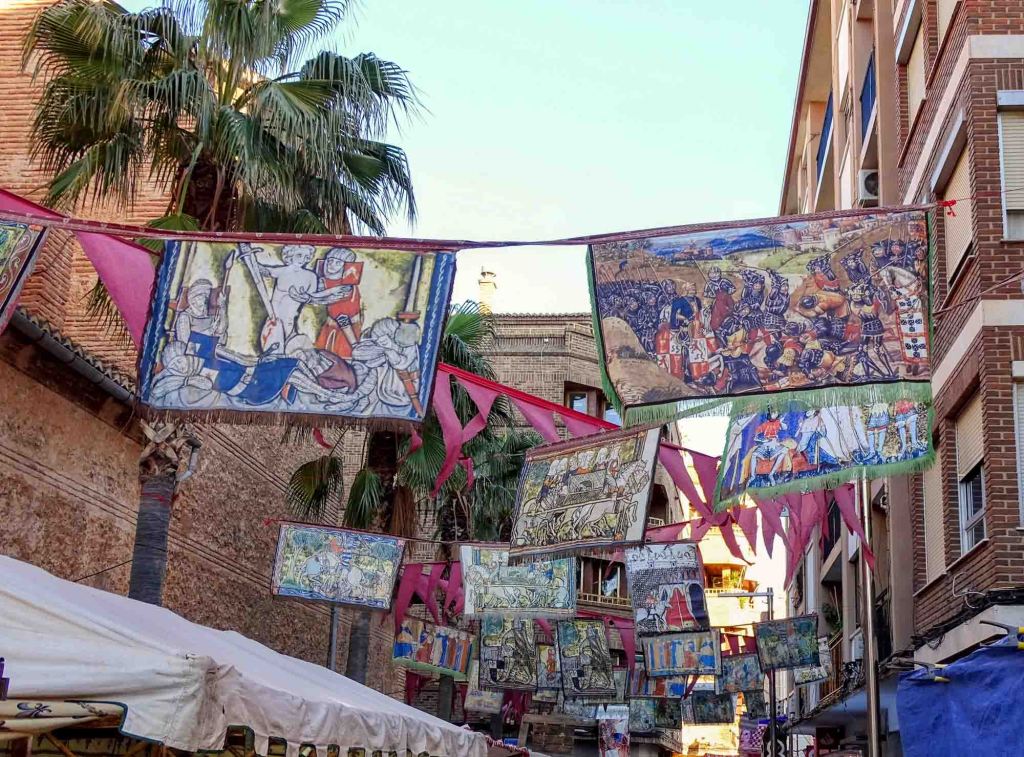
The entire festival was surrounded by hanging banners that showed images of medieval life, the streets and squares were completely covered in thick layers of straw, the participants were dressed in period clothing and ‘Christian and Moor’ costumed actors role played historical characters reenacting various sword battles. There were a variety of medieval booths with educational displays and demonstrations. We visited booths of blacksmiths, potters, carpenters, armor, soap making, basket weaving, fabric weaving, paper making, scribes, witchcraft and medicine, musical instrument makers, leather crafts and falconry. We saw an exhibition of birds of prey, a parade and traveling street musicians.

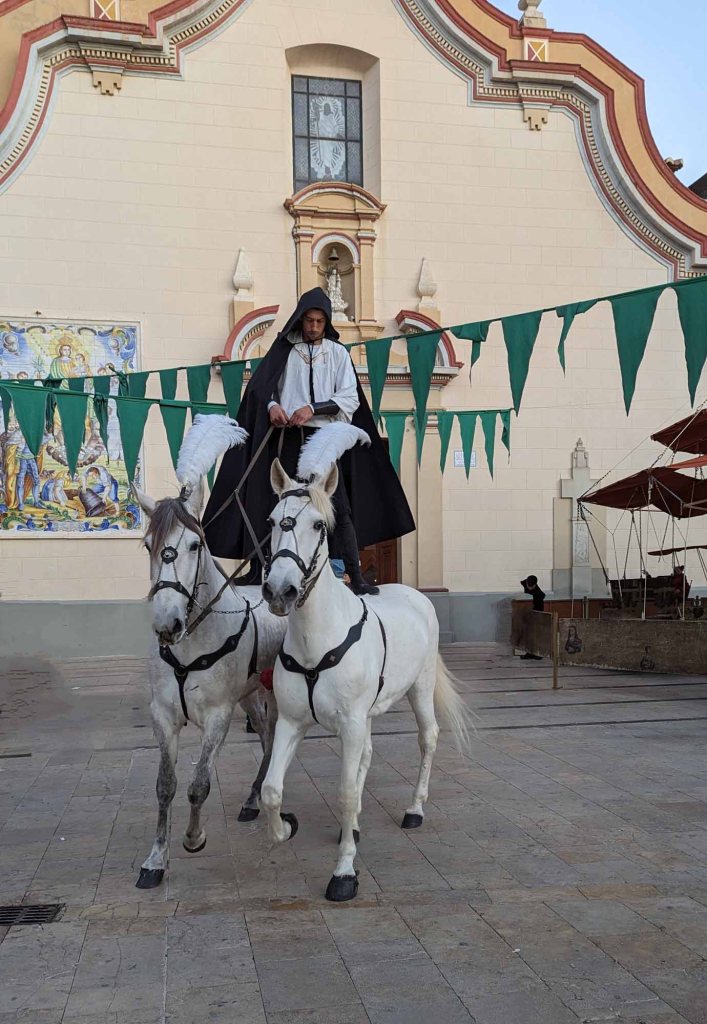
Perhaps the most interesting performance we saw was a black caped horse rider. While standing with one foot on the back of each of two horses, he guided/rode the pair of horses around the main square at the festival.
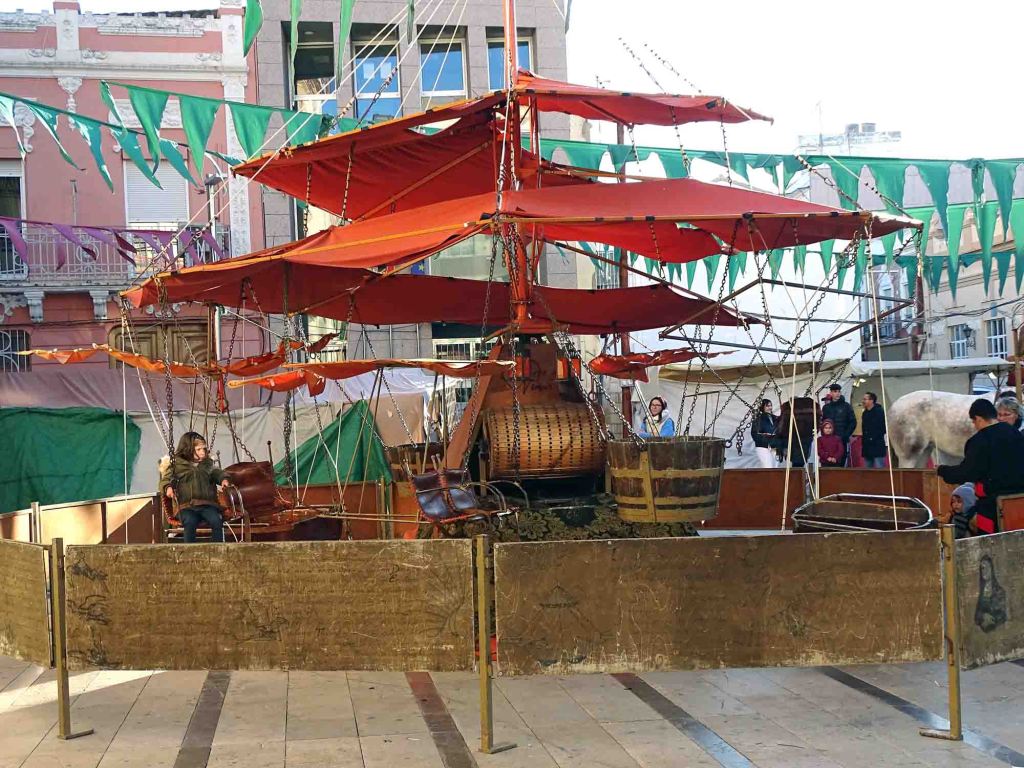
There were also plenty of booths offering simple but hearty food and beverages that we sampled. We quickly perused the booths selling items, although one booth selling naturally gold hued Brazilian grass that had been made into jewelry caught our eye. And the antique, hand-operated, leather ferris wheel and carousel were a site to behold.
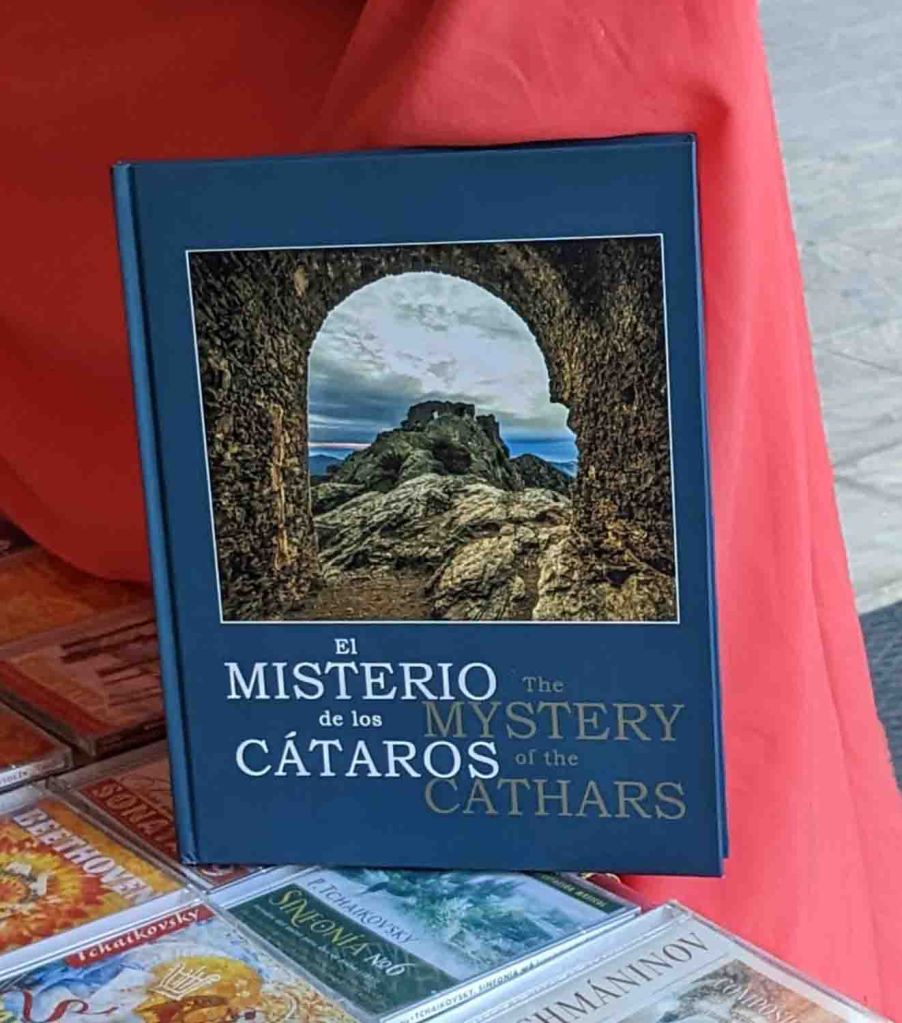
Also at the Medieval festival was a booth selling books about Catharism, a Christian movement that existed between the 12th and 14th century and primarily found in southern Europe.
The Cathars believed in two gods – a good one and an evil one. They believed the good God was the God of the New Testament – creator of the spiritual realm, and the evil God or Satan was the God of the Old Testament – creator of the physical world. The Catholic church persecuted them as a heretical sect and Catharism, with the aid of the Inquisition, was eventually stamped out. This book however looked like it may be an interesting read.
Llíria
In ancient Iberian times, Llíria was known as Edeta, and since 2019, Llíria is proudly known as the ‘Creative City of Music’, a designation awarded by UNESCO.
History, culture, music, monuments and some of the greatest archaeological sites in the Valencia area, are to be found in Lliria. However the population is only 23,000 and small towns tend to close their tourist sites early, especially in the off-season. Unfortunately we got a late start to our day and learned most tourist sites were open only 2 hours in the mornings.
After walking past several closed sites we decided to stop in at the tourist office for additional options. Much to our surprise, the attendant grabbed his keys, closed up the tourist office and acted as our guide to a couple of closed nearby sites. He unlocked gates and escorted us around the ruins of the ancient Roman Baths. He was well informed and we were surprised to discover evidence of ancient steam rooms. Typical Roman Baths followed thesame pattern. One entire room was as a cold water bath, a frigidarium, used to cool down, another room was for warm water baths, a tepidarium, where bathers would be cleansed and a third room was hot water, a caldarium, used for lounging and steam bathing. There were also large outdoor swimming pools. Men and women each had separate wings and the difference between the separate baths was generally the women’s swimming pool was located indoors and private while the men’s swimming pool was open to the outdoors.

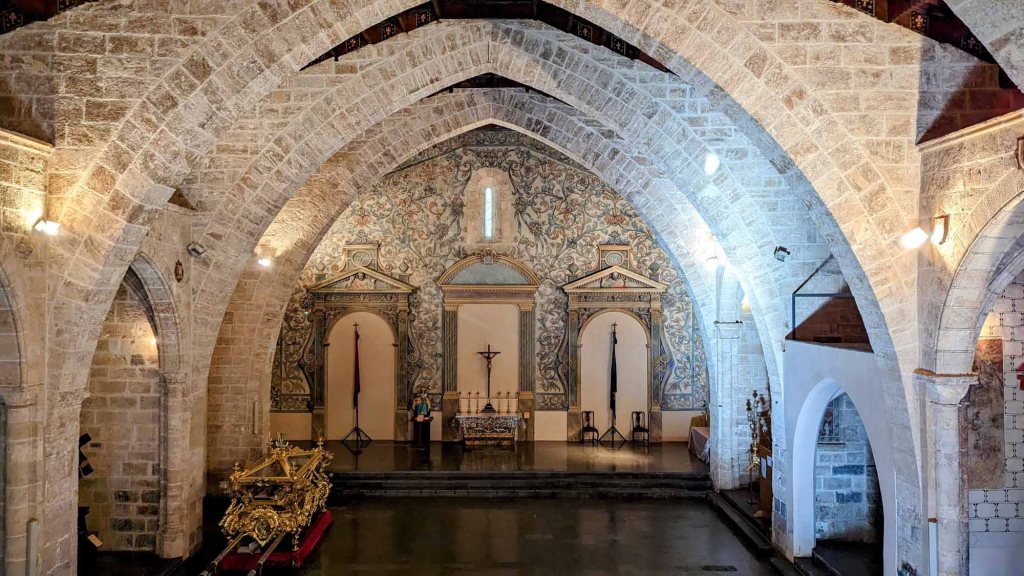
While exploring Llíria, we passed medieval walls, gazed up at interesting architectural details and saw numerous beautiful churches, including Santa Maria de la Sangre or Saint Mary of the Blood Church. The church is located on a hill above the current city, where the medieval city of Edeta had been based.
Saint Mary of the Blood Church was built between 1253 and 1279, over an even older mosque, and is said to be an excellent example of 13th century Valencian architecture. There is a lovely coffered ceiling decorated in the Mudejar tradition with scenes of knights, mythological animals, plants and heraldic motifs like the fleur de lis. This quaint old temple with its blend of Moorish influences and medieval art gives the church a peaceful aura and we were pleased we had the opportunity to tour it.
Segorbe
Archaeological remains provide evidence that mountainous Segorbe was inhabited as far back as the mid-Palaeolithic Age (250,000-30,000 years ago).
The first writing about ancient Segobriga, as it was one named, was by the Roman author and naval commander, Pliny the Elder, who died in 79 CE during the eruption of Mount Vesuvius and subsequent burial of Pompeii. The discovery of ruins in Segorbe of a large roman city has been identified as ancient Segobriga.
In the 8th century Segorbe was occupied by the Moors from North Africa and when the last Almohad governor converted to Christianity, Segorbe became a base for the christian conquest of Valencia in 1238.
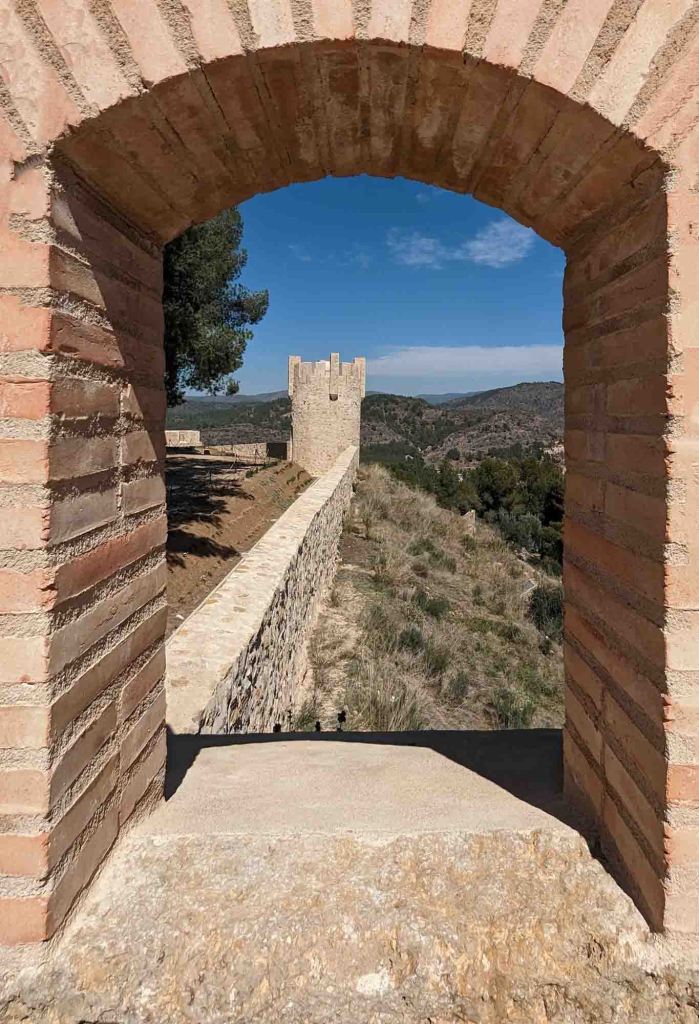
Segorbe’s ancient castle and fort originated as a Moorish alcazar but today there is very little left of the fort that sits high on the hill overlooking the town.
The city’s popular and unique “Segorbe Bulls and Horses Entrance” dates to the 14th century and is thought to be one the oldest fiestas in Spain. The famous, much larger and wilder, Running of the Bulls in Pamplona, Spain is held annually in July, whereas the similar, albeit smaller, Semana de Toros – week of the bulls – takes place the second week of September in Segorbe. Every day at 2pm for an entire week, a dozen skilled horsemen tie ropes on 6 horned bulls then race the herd around the walled perimeter of the old medieval city and down the main street ending in a large market square. The “A la Entrada de Toros” monument in the middle of Obispo Ahedo Square was the first thing we saw when we arrived in Segorbe and it certainly piqued our interest in this part of the town’s history.

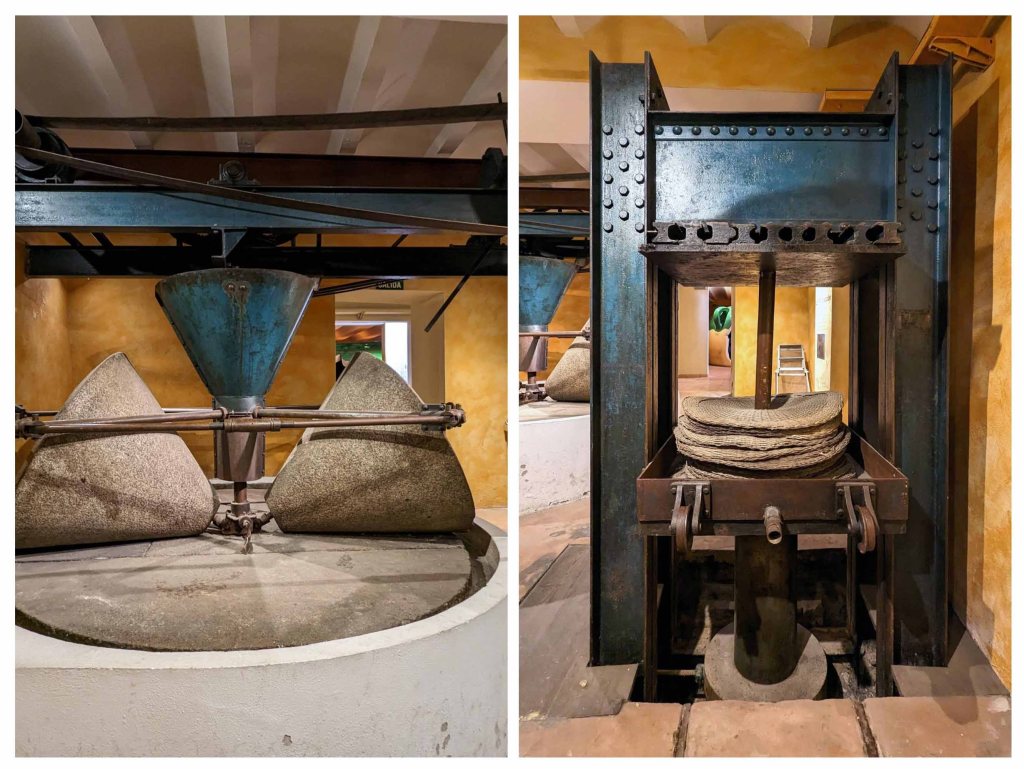
To our surprise we learned that Spain is the world’s leading producer of olive oil, followed by Italy and Greece. We had thought that order was different. Perhaps we should have known because we have seen thousands of olive trees and hundreds of acres of olive fields throughout the entire Spanish countryside. There are 17 autonomous regions (similar to a US state or Canadian province) in Spain and we have visited 11 of them. Olive oil is produced in every region we have been to, so when we came across the Olive Oil Museum of Segorbe we decided to pop in.
The couple that own the olive grove, tourist accommodations, museum and shop, were friendly and knowledgeable. The precious liquid gold, otherwise known as olive oil, has more than 7000 years of history and the museum with its interactive audiovisual screens, exhibition of numerous machinery and tools used in the work that turn barely ripe olives into the exquisite flavor of fresh olive oil, was an ideal way to begin to understand the history of olive oil.
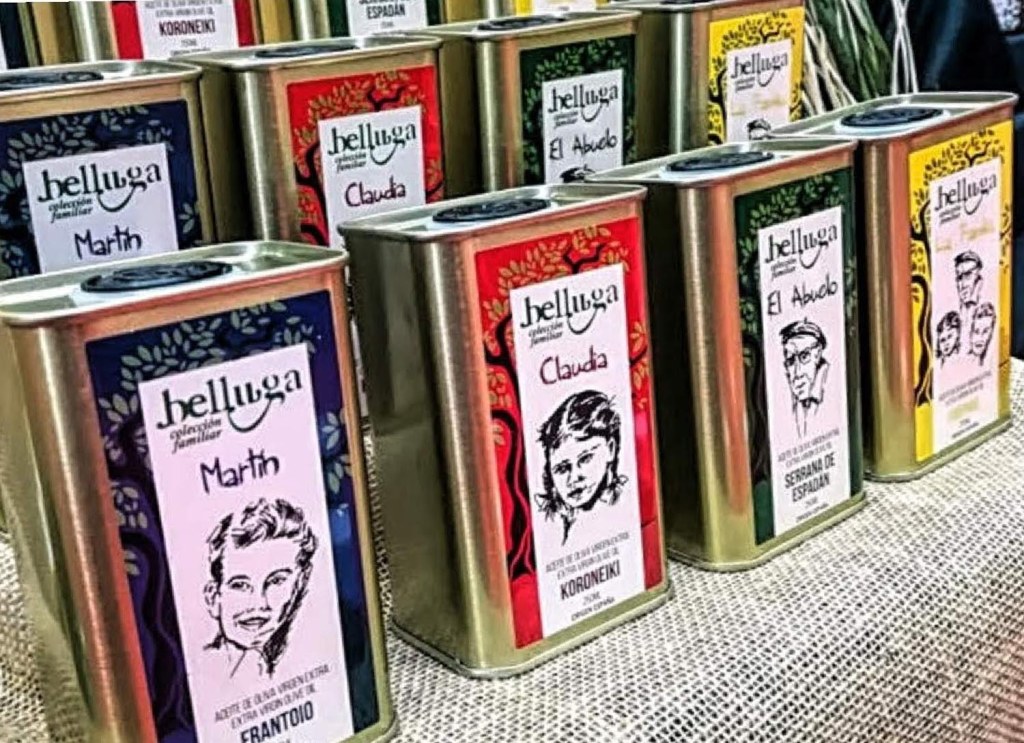
At the end of the tour the owner, a former pharmacist, invited us to taste her farm’s wonderful extra virgin olive oil productions. We loved the story she shared that when each of her children (Claudia and Martin) were born she and her husband planted olive trees so the child would have a legacy and an income. Today they produce both a Claudia and Martin line, each made with a different varietal of olive. The oil is fantastic and pure and made extraordinary gifts. The next photo below is not our own, we used it from their website.
Aranjuez
A few days’ stay in Aranjuez bumped this city up into ‘one of our favorite small towns in Spain’ category.
Located an hour south of Madrid by metro, Aranjuez, population of 60K, is well located to both the capital and the international airport.
In 1560 Aranjuez became one of the Royal Estates of the Crown of Spain and up until 1752 only royalty and the nobility were allowed to live in the town. Today the Royal Palace of Aranjuez is still used as an occasional Royal residence and is managed by a State Heritage Agency.
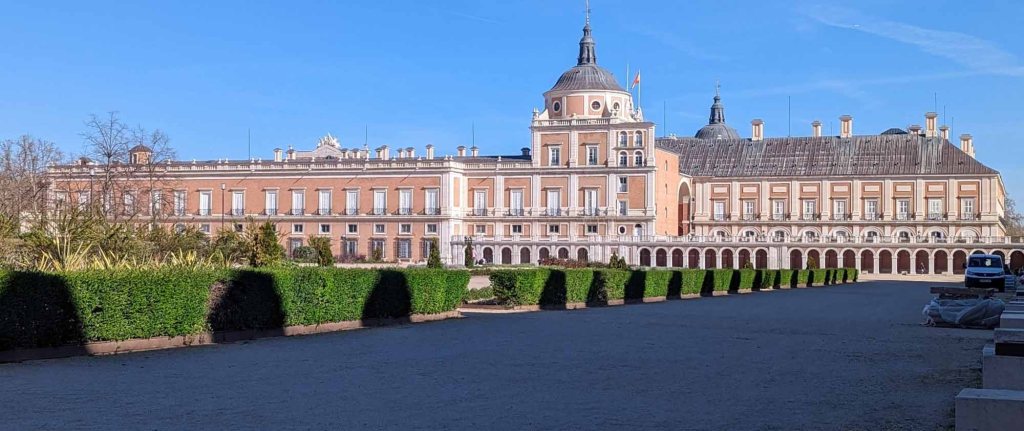
(Two years ago we spent our anniversary at another royal residence, the magnificent Royal Palace of La Granja de San Ildefonso. It was equidistant from Madrid, except we traveled north to San Ildefonso rather than south to Aranjuez.)
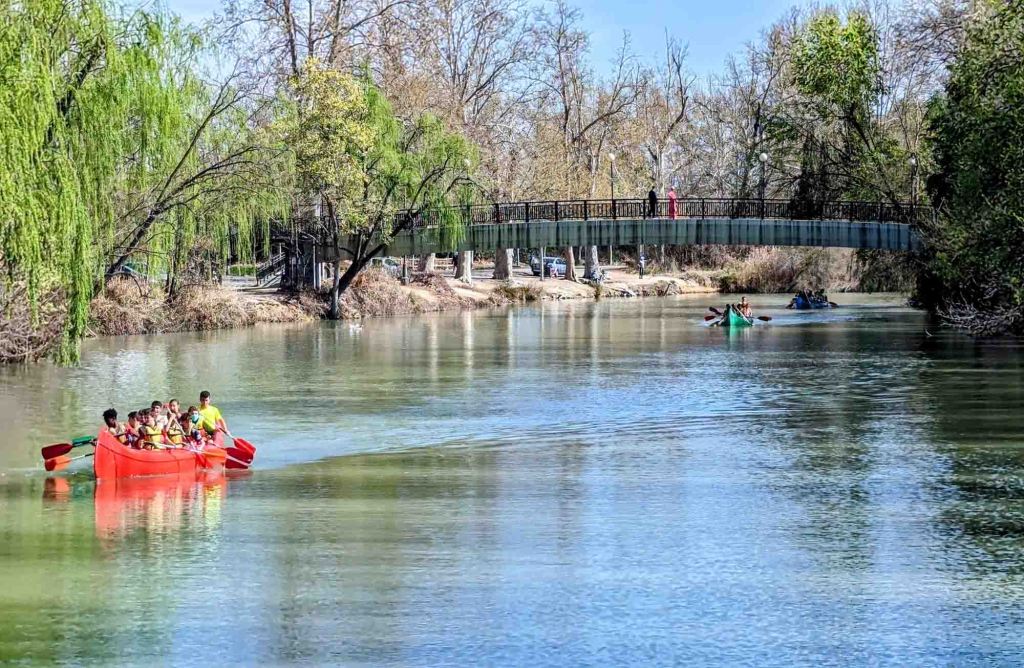
Located along the picturesque Tagus River, it is a beautiful, clean, well laid out city with wide streets and tree lined boulevards. Together with its impressive architecture and numerous large parks, Aranjuez was a gem to discover.
At the end of each blog we try to sign off as if we are inhabitants of the place we visit; which we are, if only temporarily. In this writing we visited 5 small towns and so wanted to include the demonym of each place, so…..
Salut from these Alfafarenc, Benetussí, Liriano, Segorbinos and Arancentano 😁
Ted + Julia
View our Aranjuez photo album here
View our Alfafar Medieval Fair (2023) photo album here

 Our Tapestry
I recognize the oil…yum! Gorgeous photos, as usual.
LikeLike
Ted & Julia Thanks for continuing to have us receive your blog postings and great photos. In addition to causing envy for your lifestyle, they dredge up memories of our times in Europe. This one prompted all the way back to 2001 when we traveled around Spain with a Choral Arts Ensemble with a concert stop at the Aranjuez Royal Palace. We are still in RB loving life. Cheers….and as Rick says “Keep on traveling”. Mary & George
[image: image.png] [image: image.png] [image: image.png]
LikeLike