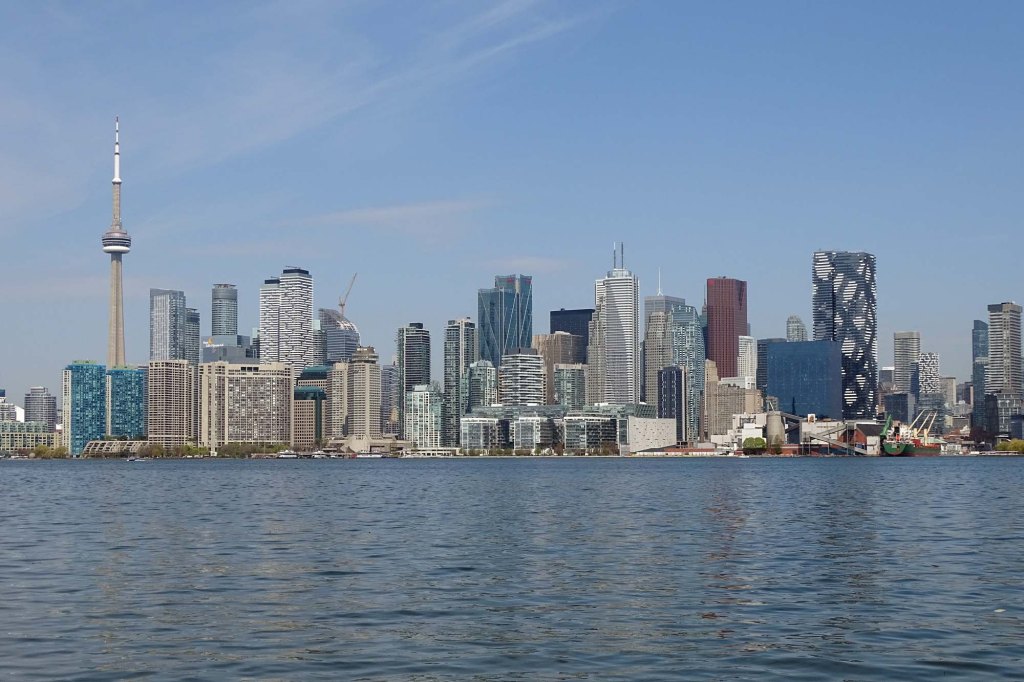
As the largest city in Canada, there were no shortage of activities and places to explore in Toronto, Ontario.
The history of Toronto dates back thousands of years, with evidence of Indigenous presence in the region dating back at least 12,500 years. The area was originally inhabited by various First Nations tribes, including the Huron-Wendat, Haudenosaunee (Iroquois), and Anishinaabe (Ojibwe) peoples. The Mississaugas of the Credit First Nation were the primary Indigenous group in the Toronto area when European settlers began to arrive. They called the area “Tkaronto” or “Tkaron:to,” which is believed to mean “place where trees stand in the water” or “place where there are trees in the water.” This name referred to the abundance of trees and the proximity of Lake Ontario, which played a significant role in their way of life.
European exploration of the area began in the late 17th century, with French traders and missionaries making contact with the Indigenous communities. In 1750, the French established Fort Rouillé near Toronto’s present-day Exhibition Place, marking their presence in the region.
However, it was the British who would ultimately have a lasting impact on the development of Toronto. In 1787, the British purchased the Toronto area from the Mississaugas of the Credit First Nation, leading to the establishment of the Town of York in 1793. The town quickly grew as a result of its strategic location on Lake Ontario and its proximity to the St. Lawrence River, becoming a vital center for trade and commerce.
In 1834, York was officially renamed Toronto and designated as the capital of the province of Ontario. The city experienced rapid urbanization and industrialization throughout the 19th century, attracting immigrants from around the world, particularly from the British Isles and later from Eastern Europe.
The city’s urban landscape evolved with the construction of iconic landmarks like the CN Tower, built between 1973 and 1976, officially opening to the public on June 26, 1976. At the time of its completion, it became the tallest freestanding structure in the world, a title it held for over 30 years.
The Aga Khan Museum
The Aga Khan Museum was established in 2014 and named after His Highness the Aga Khan, the spiritual leader of the Ismaili Muslim community. As visitors, we were told that this museum is intended to be a platform for promoting intercultural dialogue, education, and the appreciation of Islamic art and heritage.
When we walked through the doors, we were immediately impressed by the architectural design of the Aga Khan Museum, created by renowned architect Fumihiko Maki. The blend of modern elements with traditional Islamic influences reflect the rich artistic and architectural traditions of the Muslim world.
Exploring the museum, we learned that they have over 1,000 rare artifacts spanning multiple continents and historical periods so there is a lot to discover even though just a small amount of that collection was currently on display.
Wandering through the displays we were impressed with how each artifact beautifully showcased the diversity and beauty of Islamic art. From illuminated Qur’ans to interesting calligraphy, ceramics, textiles, and more the immense creativity and spiritual significance associated with Islamic artistic traditions is in full view.

When we visited the museum, the main exhibition was still being prepared and not yet open, although from what we were able to visit, we felt it would be worth returning to see the rest.
The Art Gallery of Ontario (AGO)
The history of the Art Gallery of Ontario (AGO) can be traced back to 1900 when it was established as the Art Museum of Toronto, making it one of the oldest art museums in Canada. It was established by a group of private citizens and art collectors who aimed to bring art education and appreciation to the city. The museum underwent a significant transformation in 1966 when it was renamed the Art Gallery of Ontario (AGO).
Over the years, it has grown in size and reputation, undergoing several expansions and renovations. One of the most significant transformations came in 2008 with the completion of the iconic Frank Gehry-designed building, which added a striking contemporary element to the museum’s architecture.
The AGO has an extensive collection of over 100,000 artworks spanning various periods and mediums. Its diverse holdings encompass European masterpieces by artists such as Rembrandt, Monet, van Gogh and Picasso.
It is also home to the world’s largest collection of Canadian art, featuring notable works by renowned Canadian artists such as Tom Thomson, the Group of Seven, Emily Carr and Jean-Paul Riopelle. We also enjoyed the African and Oceanic art and contemporary works.
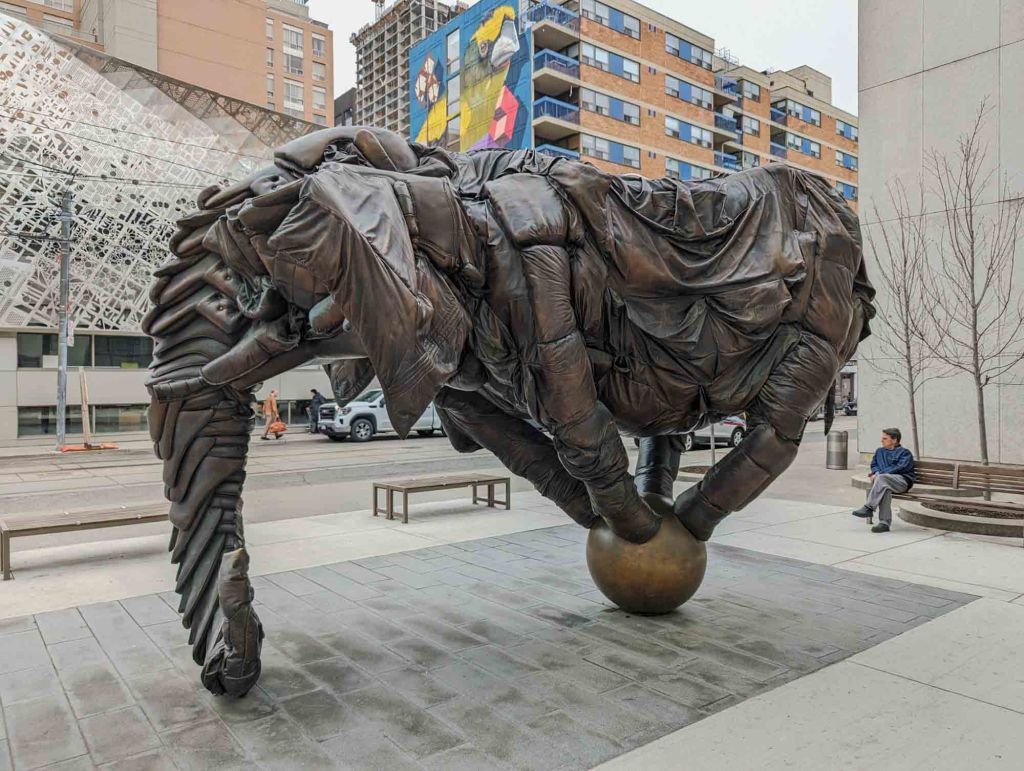
One of the more noticeable pieces is Couch Monster: Sadzěʔ yaaghęhch’ill, 2022 by artist Brian Jungen. The bronze sculpture was modelled from second-hand leather furniture and evokes a performing elephant. The sculpture is 13 feet (4 m) high.
The Bata Shoe Museum
The Bata Shoe Museum is a fun stop dedicated to the exploration of footwear and its significance in different cultures around the world. Founded by Sonja Bata in 1995, the museum showcases a collection of shoes that span multiple periods, offering visitors a glimpse into the art, craftsmanship and cultural significance of footwear.
The museum’s collection boasts over 13,000 pairs of shoes but what was on display was a small fraction of the total collection. The exhibits feature shoes from ancient civilizations, traditional footwear from various cultures, celebrity shoes and contemporary designer creations.
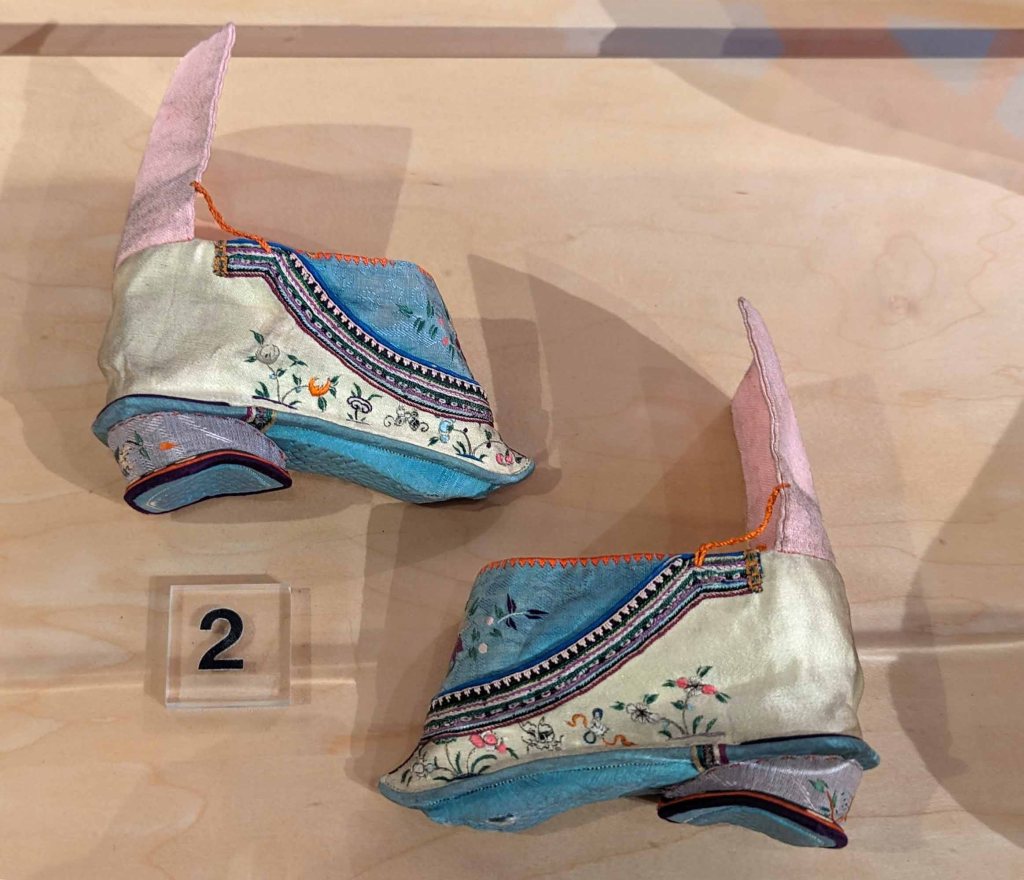
The handful of exhibits delved into themes like fashion, function, ceremonial use and the evolution of footwear technology. From delicate Chinese lotus shoes to ancient Egyptian sandals and iconic celebrity shoes, the museum offers a glimpse into the role that shoes have played in human history.
The Gardiner Museum
The Gardiner Museum is a prominent institution dedicated to the art and history of ceramics. Established in 1984, the museum is recognized as one of the world’s leading centers for the study and exhibition of ceramic art. The museum is located in a striking contemporary building.
The Gardiner Museum houses an extensive collection of over 4,000 ceramic artworks from around the world. Its holdings cover a wide range of historical periods, styles, and techniques, providing a comprehensive overview of the rich and diverse world of ceramics.

If you’re interested in getting hands-on with ceramics, be sure to visit The Gardiner Museum’s Clay Studio. While we didn’t join in, this studio provides a hands-on experience where visitors can learn and explore their own creativity through classes and workshops.
Guild Park and Gardens
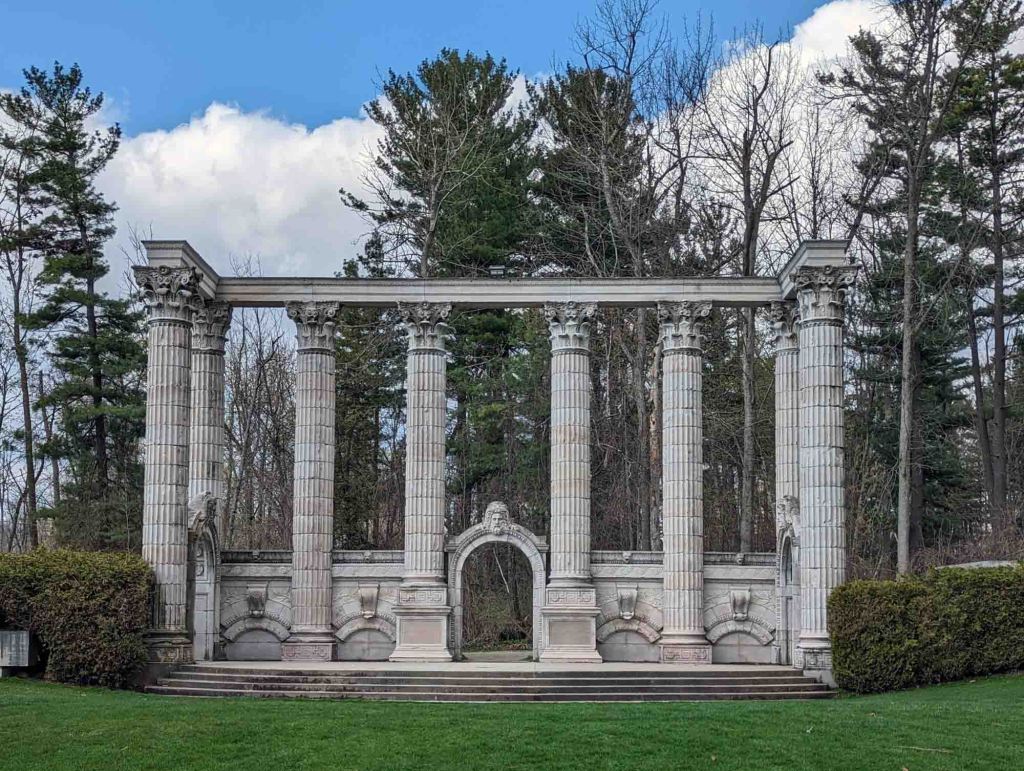
Guild Park and Gardens is a public park known for its diverse collection of salvaged architectural elements sourced from significant Toronto buildings. These fragments include pillars, columns and intricately carved stone pieces. Each artifact carries its own historical significance, showcasing the city’s architectural heritage. Situated on the grounds of a former artists’ colony known as the Guild of All Arts, the park offers a unique blend of art, history and natural beauty.
The Guild of All Arts, also known as the Guildwood Village, was a historic artists’ community located in Scarborough, Toronto, Canada. It was founded in 1932 by Rosa and Spencer Clark, who were artists and philanthropists. The Clarks envisioned a community where artists could live and work together, surrounded by natural beauty.
The Clarks believed in the importance of art and nature in promoting well-being and inspiring artistic expression. They invited artists from various disciplines, including painting, sculpture, music and writing, to live and work in the Guildwood Village. This diverse artistic community attracted renowned artists and became a hub for creativity and cultural exchange.
One of the notable features of the Guild of All Arts is the Guild Inn, a historic hotel that was transformed into an art gallery and sculpture garden. The Guild Inn showcased the works of local and international artists and became a popular cultural destination for visitors.
The Royal Ontario Museum (ROM)
The Royal Ontario Museum (ROM) is one of the largest museums in North America. Established in 1914, the ROM is dedicated to preserving and showcasing art, culture and natural history from around the world.
The museum’s impressive architecture is a blend of different styles, incorporating elements of Romanesque and Byzantine Revival. The iconic Michael Lee-Chin Crystal, an addition to the original building completed in 2007, adds a modern and striking element to the museum’s façade.
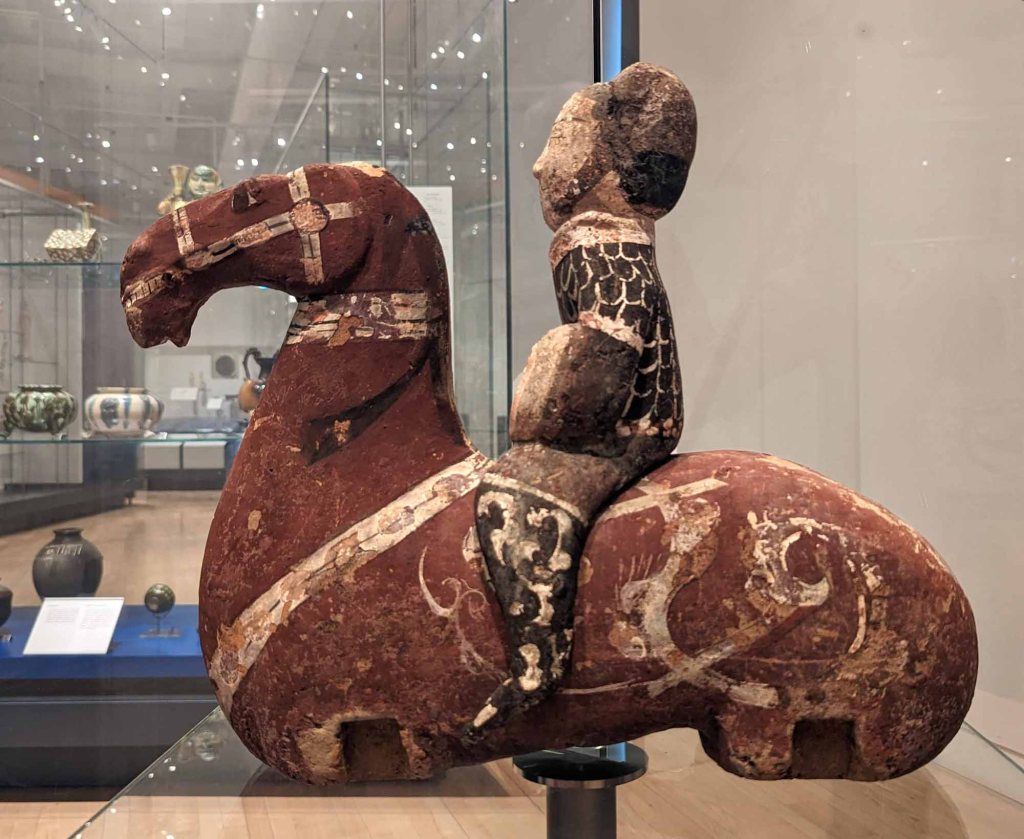
The ROM’s vast collection spans various disciplines, including art, archaeology, natural history and cultural artifacts. Its collection comprises over 6 million items but today we only viewed their collection of cultural artifacts from Egypt, China, Greece and Rome.
Springtime in Toronto was a delight. We had forgotton how fast spring happens in the northern hemisphere. When we arrived there was not a new leaf or flower in sight but in just a few short weeks there were countless bulbs and spring flowers blooming and the trees had full canopies of gorgeous fresh green leaves. A great time to travel.
Cheers from these Torontonians,
Ted + Julia
View our Aga Khan Museum photo album here
View our Art Gallery of Ontario photo album here
View our Bata Shoe Museum photo album here
View our Gardiner Museum photo album here
View our Guild Park and Gardens photo album here

 Our Tapestry